How Tech Startups are Using BigQuery and Vertex AI to Outsmart Enterprise Ad Budgets
Tech startups can easily gain a competitive edge by centralizing disparate marketing data into Google BigQuery to unlock predictive analytics using Vertex AI and LLMs. By integrating data from Google Ads, Meta, and HubSpot, lean teams can create a unified data view to optimize ROI and build proprietary, actionable insights. Read this blog for a deeper understanding of this data-driven strategy.
In the current tech landscape, the phrase AI in Marketing has become almost ubiquitous, yet for many tech Startups its true potential remains untapped. Most marketing teams interact with artificial intelligence through the native, black-box algorithms provided by platforms like Google Ads and Meta. While these built-in tools are effective for localized optimization, they lack the cross-channel intelligence required to drive holistic business and marketing data analytics.
For a Startup founder or a growth director, the real competitive advantage does not lie in using the same tools as everyone else; it lies in the ability to create a unified marketing data view that fuels proprietary insights. By centralizing data from disparate sources like Google Ads, Meta / Facebook Ads, HubSpot, etc into a single Google BigQuery project, Startups can unlock advanced AI for Startups that transcends platform silos.
The Game Changers: BigQuery LLMs and Vertex AI
The transition from basic reporting to predictive modeling is where the most significant gains in marketing ROI optimization are found. BigQuery is no longer just a data warehouse; it is a full-scale AI development environment. With BigQuery Large Language Model (LLM) integrations, users can now execute large language model queries directly against their structured data using SQL. This means a growth marketer can ask natural language questions of their multi-channel data, such as which creative elements in Meta ads are driving the highest quality leads in HubSpot, without needing a dedicated data science team. This level of accessibility is transformative for lean teams looking to iterate rapidly.
Furthermore, Vertex AI machine learning capabilities allow Startups to move beyond historical analysis and into the realm of predictive analytics. By feeding unified data into Vertex AI, companies can build custom propensity models to identify which users are most likely to churn or which leads have the highest predicted lifetime value (pLTV). Instead of reacting to last week's performance, Startups can proactively adjust budgets toward the segments that are statistically most likely to convert. This sophisticated approach allows small Startup teams to punch far above their weight class, competing with enterprise-level incumbents by making more intelligent, data-driven decisions at a fraction of the traditional cost.
The Low Barrier to Entry for Startups
One of the most common misconceptions among startup founders is that building an enterprise-grade data stack is prohibitively expensive. In reality, for a startup just getting its feet under it, this infrastructure can often be run for nearly free. Google Cloud Platform (GCP) offers a generous free tier that includes 10GB of storage and 1TB of query processing per month in BigQuery. For most early-stage startups, this is more than enough to handle the ingestion of their primary marketing channels. By leveraging native connectors and the BigQuery Data Transfer Service, the overhead of data engineering is significantly reduced, allowing marketers to focus on strategy rather than pipeline maintenance.
Easy Step-by-Step Overview of BigQuery Data Ingestion
Implementing a unified marketing data view is a structured process that begins with automated data ingestion. Here is an accessible summary of how to build this pipeline:
- Google Ads & GA4: Utilize the native, no-cost BigQuery links available within the Google Ads and Google Analytics 4 interfaces. These connections allow for daily automated exports of granular event-level data directly into your BigQuery dataset.
- Meta Ads (Facebook/Instagram): Use the BigQuery Data Transfer Service or third-party serverless connectors to pull campaign, ad set, and creative performance metrics. This ensures that your social spend is analyzed alongside your search and display efforts.
- HubSpot CRM: Integrate your CRM data using HubSpot's native Snowflake or BigQuery integrations (or via middleware like Fivetran or Airbyte). This step is crucial for connecting top-of-funnel marketing spend to bottom-of-funnel revenue and sales activities.
- SEO & Keyword Data: Pull in Google Search Console and Google Ads' Keyword Planner data to benchmark your organic performance against paid initiatives. This provides a comprehensive view of your search engine presence.
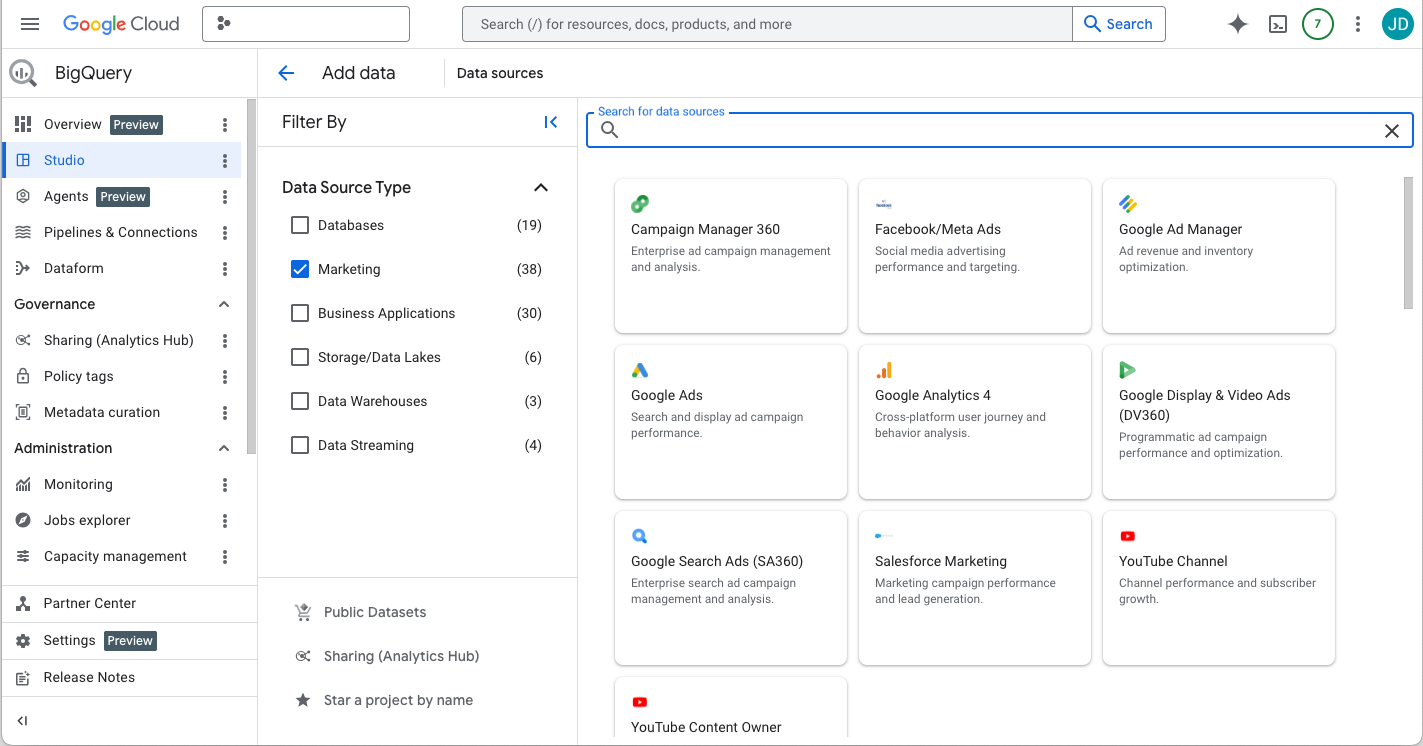
Once these sources are unified, the data is cleaned and joined using SQL, creating a single source of truth that represents the entire customer journey from the first click to the final sale.
Future-Proofing Through Historical Data
The most critical advice for any tech startup is to start the data flow immediately! Even if you are not ready to implement complex machine learning models today. The efficacy of AI for startups is directly proportional to the quality and volume of the historical data available. Machine learning models require training data to identify patterns and make accurate predictions. If you begin centralizing your data now, you are building a historical data reservoir that will be invaluable six to twelve months down the line. Including things like Search Console data early on allows you to understand SEO / GEO trends and seasonal fluctuations that a new dataset simply cannot capture. By the time your Startup is ready to scale, you will have a rich, proprietary dataset ready to be ingested by Vertex AI machine learning models, giving you a head start that competitors cannot easily replicate.
Conclusion: The ROI of an AI-Driven Stack
The long-term ROI of an AI-driven data stack is found in its ability to eliminate waste and maximize growth. By centralizing business and marketing data analytics into BigQuery, startups move from a fragmented view of their performance to a cohesive strategy fueled by BigQuery LLM integration and Vertex AI. This infrastructure not only optimizes current marketing spend but also provides the foundational intelligence required for long-term scalability. The transition from manual reporting to automated, AI-enhanced insights is the hallmark of a modern, data-first tech startup.
Mountainous Marketing can help with every stage of this journey—from ingesting ad data sources to generating high-level AI insights with BigQuery LLMs or building custom, proprietary ML models in Vertex AI.
Mountainous Marketing is available to advise on marketing strategies, tech implementations and analytic designs. Contact Us
Contact Mountainous Marketing: 9705861133 · Colorado